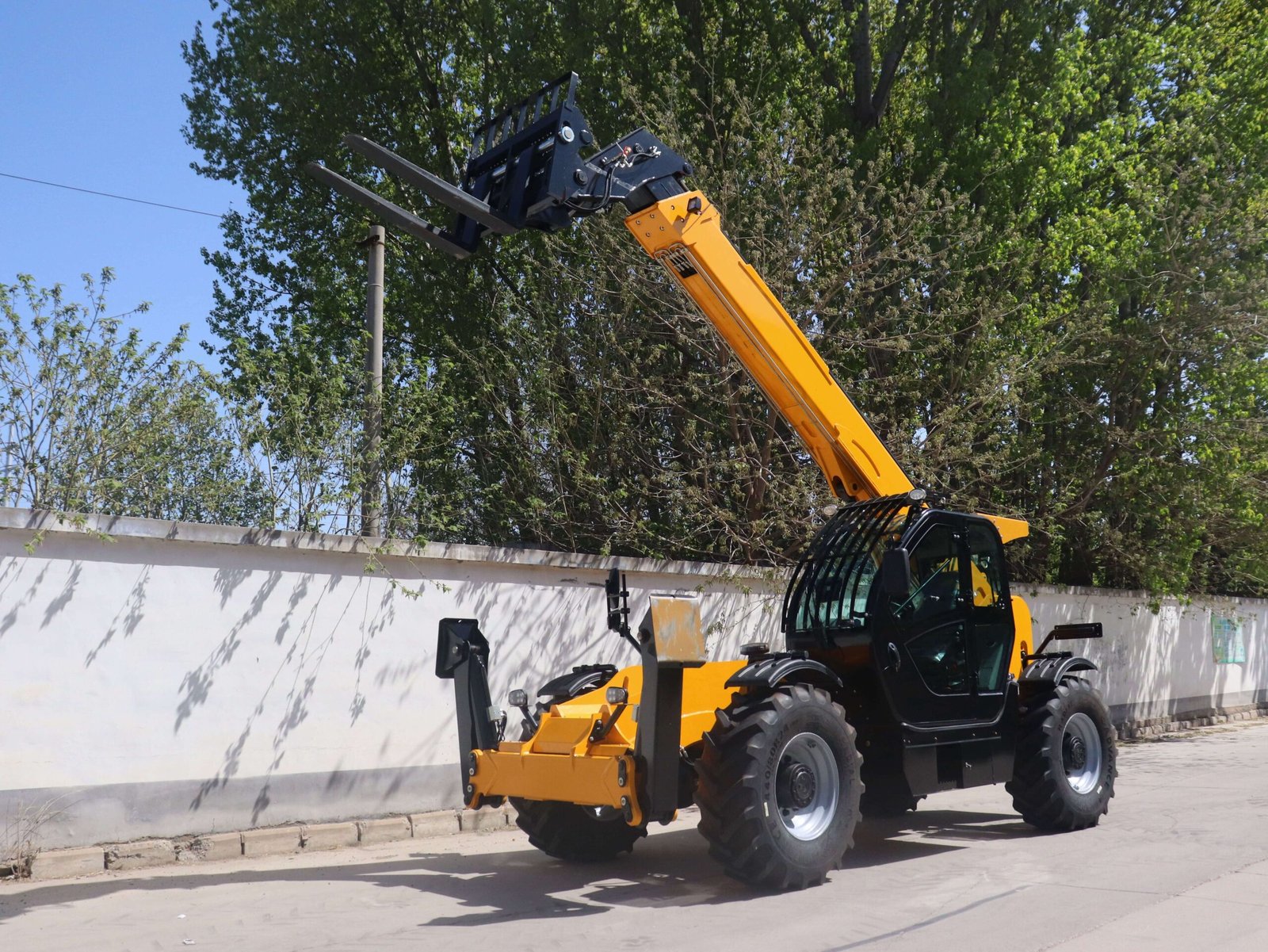
Choosing the wrong machine for your job site is a costly mistake. This confusion between a telehandler and a crane can waste time, money, and put your project behind schedule.
A telehandler is a versatile material handler, your site’s Swiss Army knife for moving various loads quickly. A crane is a specialized heavy-lifting machine, a surgical scalpel for placing massive objects with precision. Choose a telehandler for flexibility and a crane for pure lifting power and height.
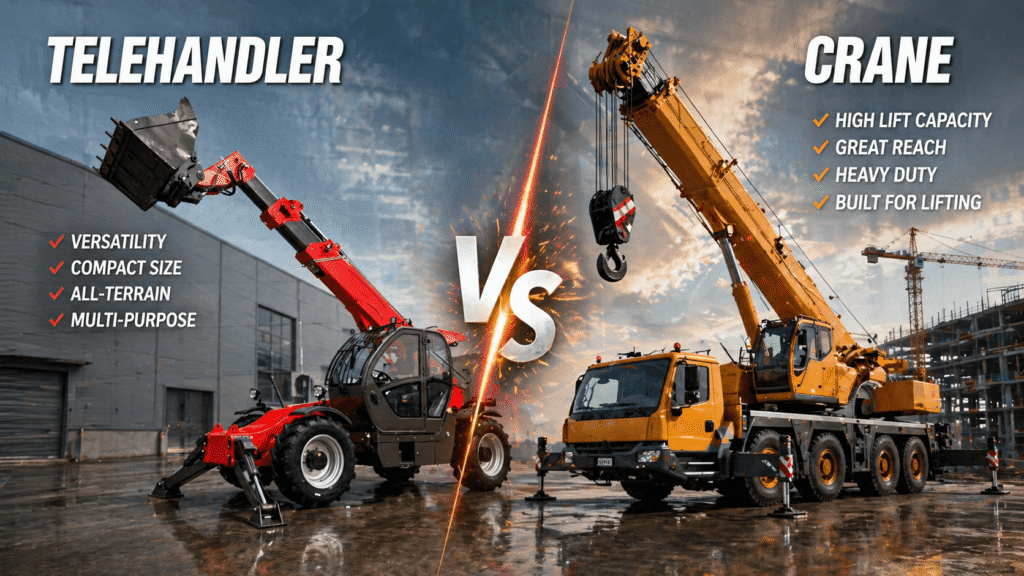
I’ve been in this business for years, and I see this question come up on almost every project I visit. People see two machines with booms and think they do the same job. They don’t. Making the right choice isn’t just about finishing the job; it’s about making your entire operation smoother and more profitable. Let’s break down the real differences so you can pick the right tool every single time.
What is the Fundamental Difference in Their Job?
You see both machines on a busy site, but do you know their real purpose? Using the wrong one for a task creates bottlenecks and slows everyone down. Let’s fix that.
A telehandler is your all-around utility player, designed to move materials from point A to point B efficiently. A crane is a specialist, built for one primary job: lifting extremely heavy loads high into the air with precision.
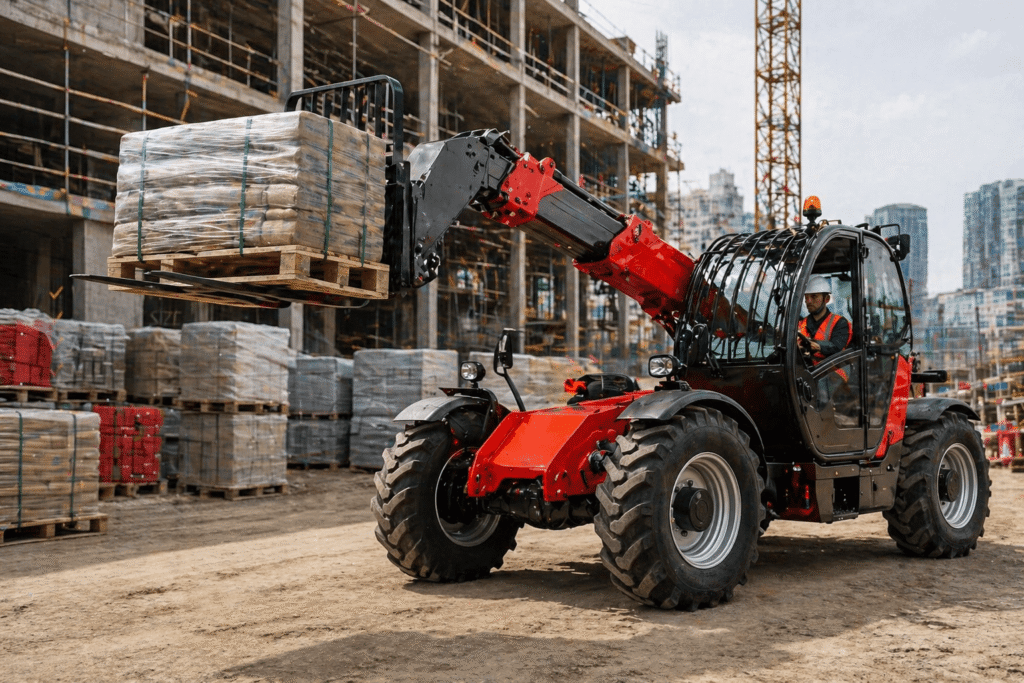
The best way I explain it to people is with an analogy. The telehandler is the “Swiss Army Knife” of the construction site. It’s designed for versatility. One moment it’s a forklift, unloading pallets from a truck. You swap the attachment, and the next moment it’s a small crane with a jib, lifting an engine block. Then, with a bucket, it’s moving gravel. Its main job is material handling in all its forms.
A crane, on the other hand, is a “heavy surgical scalpel.” It has one primary function: to lift and place heavy objects. It’s not designed to drive around the site carrying materials. It is set up in a strategic spot to perform critical, heavy lifts that no other machine can handle.
Here’s a simple breakdown:
| Feature | Telehandler | Crane |
|---|---|---|
| Core Purpose | Multi-functional material handling | Specialized heavy lifting |
| Analogy | Swiss Army Knife | Surgical Scalpel |
| Design Focus | Versatility & Mobility | Power & Precision |
On many large projects, they work together. The telehandler acts as a support unit, quickly bringing materials to the crane’s drop zone. The telehandler handles the fast, repetitive work, while the crane handles the single, massive lift.
How Do Their Lifting Power and Reach Compare?
Underestimating a load or overestimating a machine’s reach is not just inefficient; it’s dangerous. But buying a machine that’s total overkill for your needs is a huge waste of money.
Telehandlers are perfect for medium-duty work, typically lifting 3 to 6 tons and reaching heights of 7 to 18 meters. Cranes are in a different league, handling dozens or even hundreds of tons and reaching heights well over 100 meters.
This is where the numbers really tell the story. A telehandler is the go-to machine for the vast majority of tasks on a construction or farm site. Think about lifting pallets of bricks to the second story, moving bags of feed, or loading a high-sided truck. Our HIOSEN telehandlers, for example, are built for this exact sweet spot, with capacities from 3-6 tons and reach from 7-18 meters. They are the workhorses that keep the project moving day in and day out.
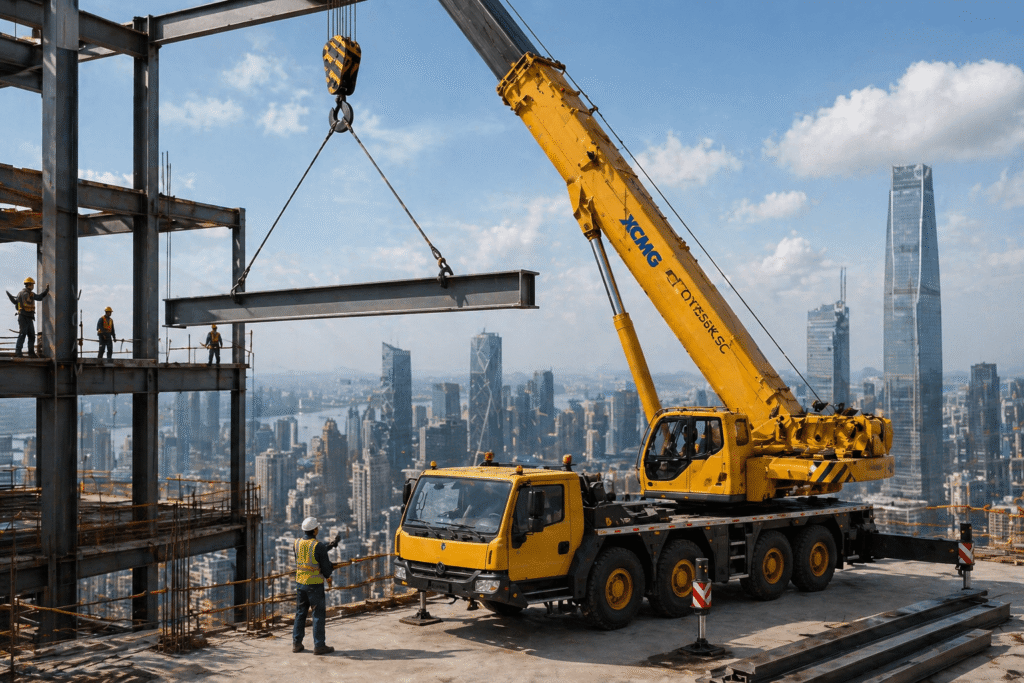
A crane is a tool for monumental tasks. It’s for lifting the main steel structure of a skyscraper, placing a bridge segment, or installing a massive generator in a power plant. The mechanics are different, too. A telehandler has a telescopic boom that can extend forward and upward, allowing it to “reach” into places. A crane uses a boom and a cable/hook system designed almost exclusively for vertical lifting.
| Specification | Telehandler (Medium-Duty) | Crane (Heavy-Duty) |
|---|---|---|
| Load Capacity | 3 – 6 tons | 30 – 1000+ tons |
| Height/Reach | 7 – 18 meters | 30 – 100+ meters |
| Typical Job | Moving pallets, site materials | Lifting steel beams, large modules |
The choice here comes down to scale. If your work involves moving and lifting materials within a certain weight and height range, a telehandler is your tool. If you need to lift something exceptionally heavy or exceptionally high, you have no choice but to bring in a crane.
Which is More Agile on a Challenging Job Site?
A powerful machine is useless if it can’t get where you need it. A big, clunky piece of equipment can get stuck or disrupt your entire workflow just by being in the way.
Telehandlers are champions of mobility, built with four-wheel drive and excellent maneuverability for rough terrain. Cranes are much larger and slower; many types are stationary and dictate the workflow from a fixed point.
This is a critical difference that impacts how you organize your entire site. A telehandler is made for a “dynamic” environment. I once visited a customer building a series of barns on a large farm. The ground was uneven and muddy. Their telehandler was constantly in motion, picking up lumber from a delivery truck, driving it across the field, and lifting it into place for the framing crew. A crane would have been completely impractical there. It’s this ability to move and work anywhere that makes the telehandler so valuable.
A crane, by its nature, creates a “centralized” workflow. You set it up in one spot, and everything revolves around it. All materials that need to be lifted must be brought to the crane’s lifting radius. This is perfect for large, planned projects like high-rise construction, where the crane becomes the heart of the operation. But for smaller, more spread-out sites, it can be a massive constraint. Think of it this way: a telehandler goes to the work, while the work must come to the crane.
Is it Better to be a Jack-of-all-trades or a Master of One?
Your project needs more than just lifting. You have to scoop, carry, place, and sometimes even lift people. Buying a separate machine for every single one of those tasks is a budget killer.
A telehandler is the ultimate jack-of-all-trades because you can quickly swap attachments to do many different jobs. A crane is a master of one: lifting. Its primary tool is a hook, making it powerful but highly specialized.
This is my favorite part to talk about because it shows the true value of a telehandler. With one machine, you can cover a huge range of tasks. At our factory, we help customers choose from a wide array of attachments:
- Pallet Forks: The standard for moving pallets, lumber, and other bundled materials.
- Bucket: For scooping and moving loose materials like gravel, sand, or dirt.
- Jib/Hook: Essentially turns your telehandler into a small crane for lifting engines or other suspended loads.
- Work Platform: A secure basket for lifting personnel to perform inspections or repairs at height.
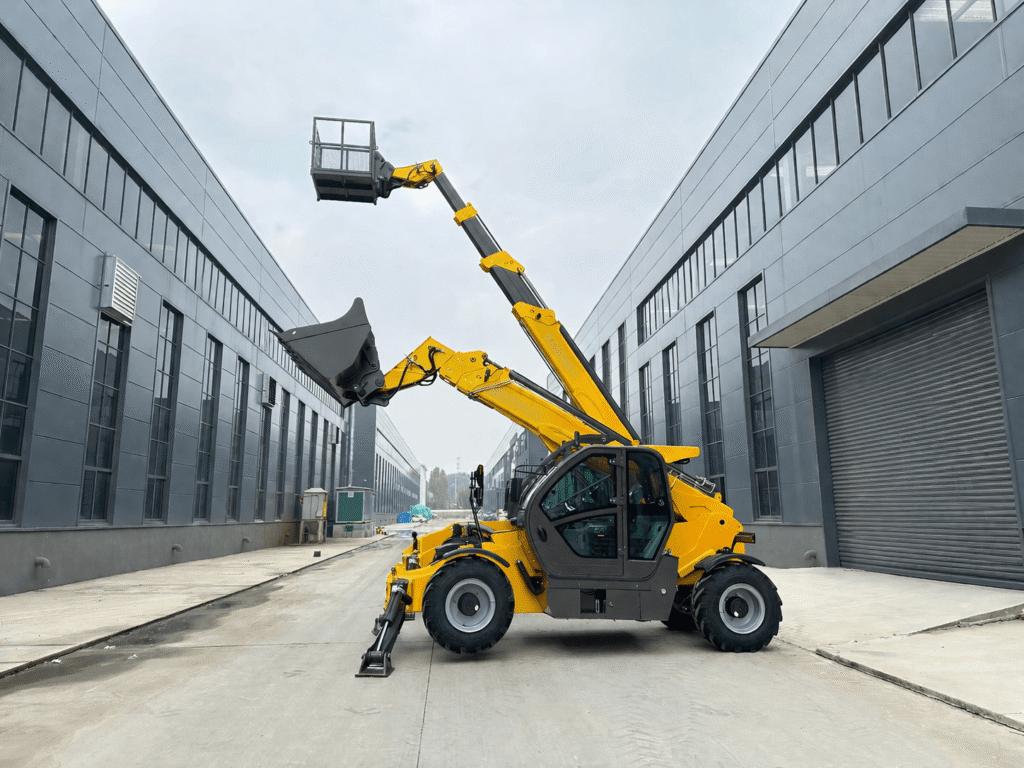
One of our clients who runs an equipment rental company told me, “Our telehandlers are our best investment. They’re never sitting in the yard because no matter what the customer needs—forklift, loader, small crane—the telehandler can do it.” A crane simply cannot offer this level of versatility. It does one thing, and it does it better than anyone, but that’s all it does.
What is the Real Impact on Your Budget and Timeline?
Every project manager I know is obsessed with two things: the budget and the deadline. Choosing the wrong equipment can destroy both, with high rental fees and long setup delays.
Telehandlers are far more cost-effective and are ready to work almost immediately upon arrival. Cranes represent a major cost and require significant time for setup, operation, and teardown, making them suitable only for planned, critical lifts.
Let’s talk about real-world costs. The purchase price or rental rate for a telehandler is significantly lower than for a crane. But the savings don’t stop there. A telehandler can be driven off a truck and be working within minutes. A large crane can take hours or even days to assemble and certify before it can make its first lift. That’s all non-productive, expensive time.
This boils down to a core management decision: “Do I need to be stronger, or do I need to be faster?”
A telehandler is your answer for “faster.” It improves the overall efficiency of your entire workflow. It’s the machine that responds quickly, handles a dozen different tasks in a day, and keeps the project flowing. A crane is your answer for “stronger.” It provides a lifting capability that is simply irreplaceable for certain key tasks. It’s a high-cost, high-impact tool used for specific, planned events. Often, the smartest sites use a telehandler to support the crane, speeding up the process by quickly moving materials into the crane’s lifting zone.
Conclusion
A telehandler offers versatile, cost-effective material handling for dynamic sites. A crane provides unmatched heavy-lifting power for specialized tasks. Choose the right tool based on your specific job’s needs.